Structure in every season. A yard that looks finished and intentional in January, not just in July, built from plants that require almost nothing from you after the establishment year.
Most landscaping is designed for the growing season and ignores winter. In Minnesota, winter is five months. Evergreen Foundation installations are explicitly designed around how the yard looks in December and February, when most landscaping simply disappears.
The plant palette is built from Zone 4 evergreens that hold their color, structure, and form through full Minnesota winters: arborvitae, yews, inkberry, juniper, and boxwood in protected microclimates. These are not plants that go dormant, die back, or need cutting to the ground.
This style works especially well with contemporary, transitional, and traditional homes where a clean, structured front yard is the goal, and where annual replanting and intensive seasonal care are not.
Why This Design Works
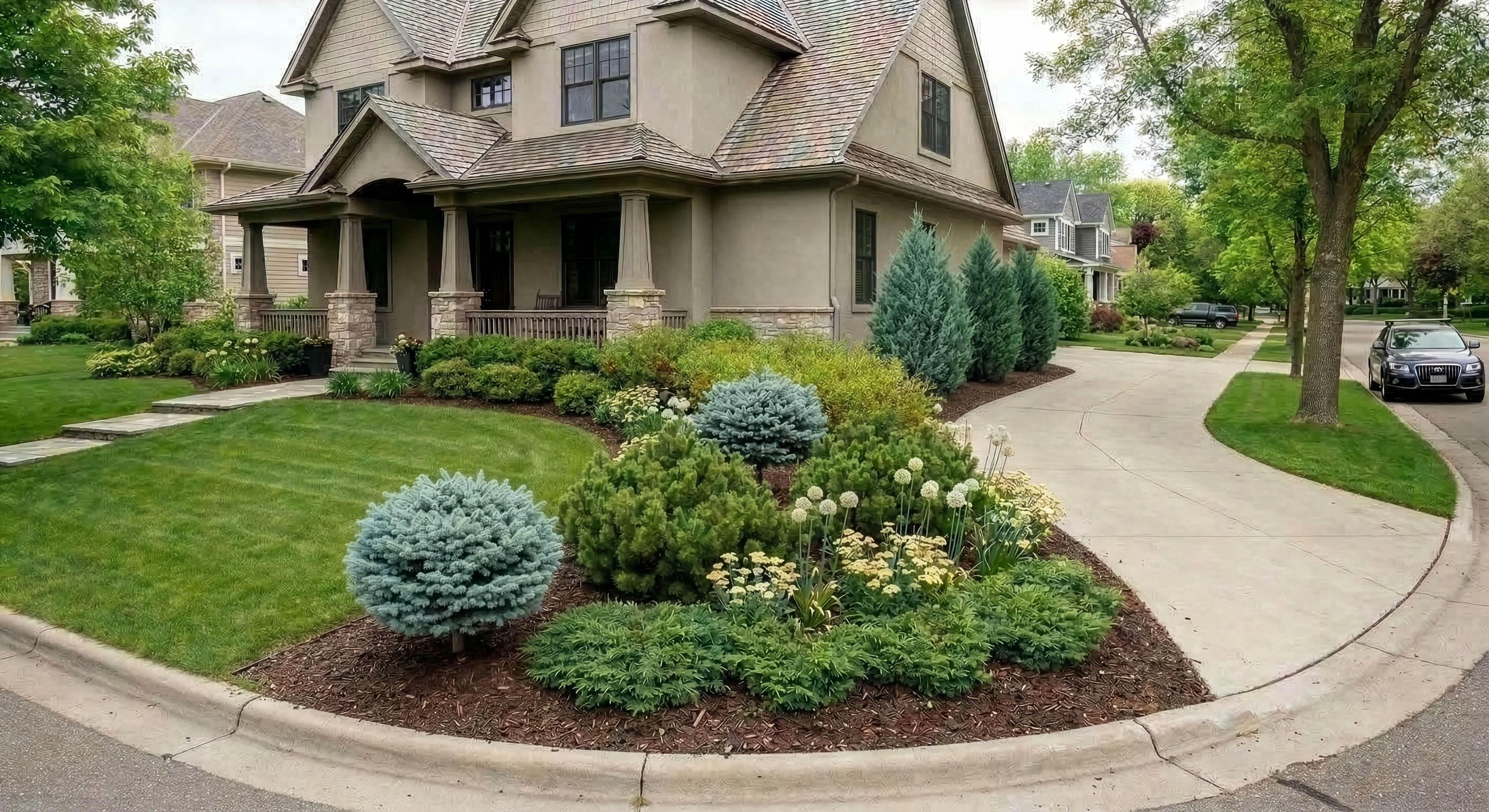
Corner lots need structure that holds from more than one angle. Two large Globe Blue Spruce create clear year-round anchor points, spreading juniper connects them at a lower level, and small yellow perennials add a light seasonal accent without distracting from the main framework.
Corner lots present a design challenge that most front yards don't face: visibility from two street angles simultaneously. This composition was oriented so that both the entry axis and the side street view are anchored with clear visual structure. The silver-blue of the spruce reads as a consistent color note through every season and against the warm tan of the home exterior.
Why This Design Works
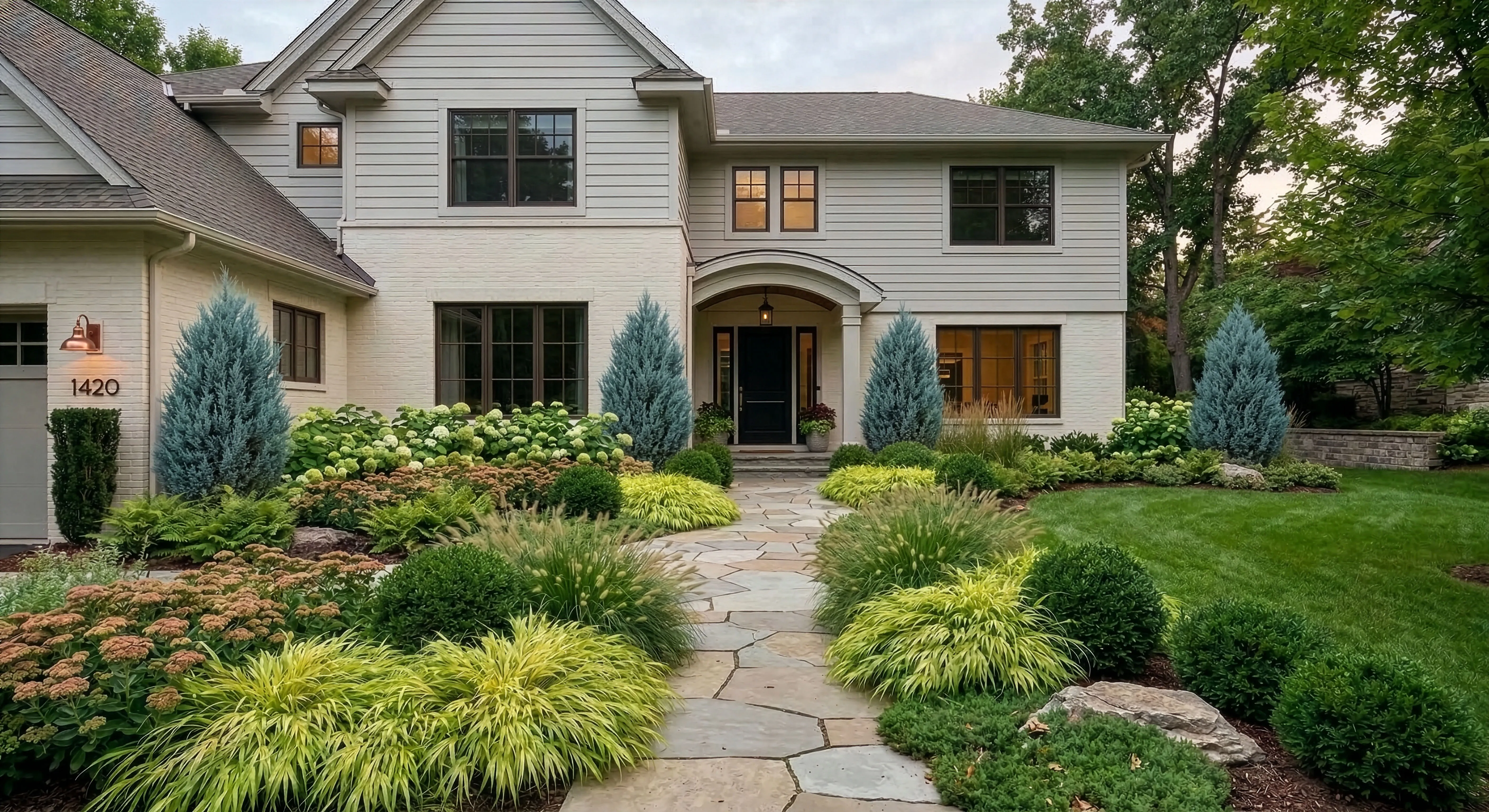
The clarity here comes from the contrast between just two dominant forms. Narrow columnar blue spruce gives the entry path a strong vertical frame, while golden Japanese forest grass softens the base in low horizontal sweeps, creating a deliberate relationship between upright structure and cascading movement.
The blue-silver needles and gold-chartreuse grass is an unusual pairing that gives this front yard a quality no amount of flowering plants could replicate. There are no seasonal perennials, no bulbs, and no cut-back plants. Just two species in a deliberate color and form relationship that looks as good in February as it does in July.
Why This Design Works
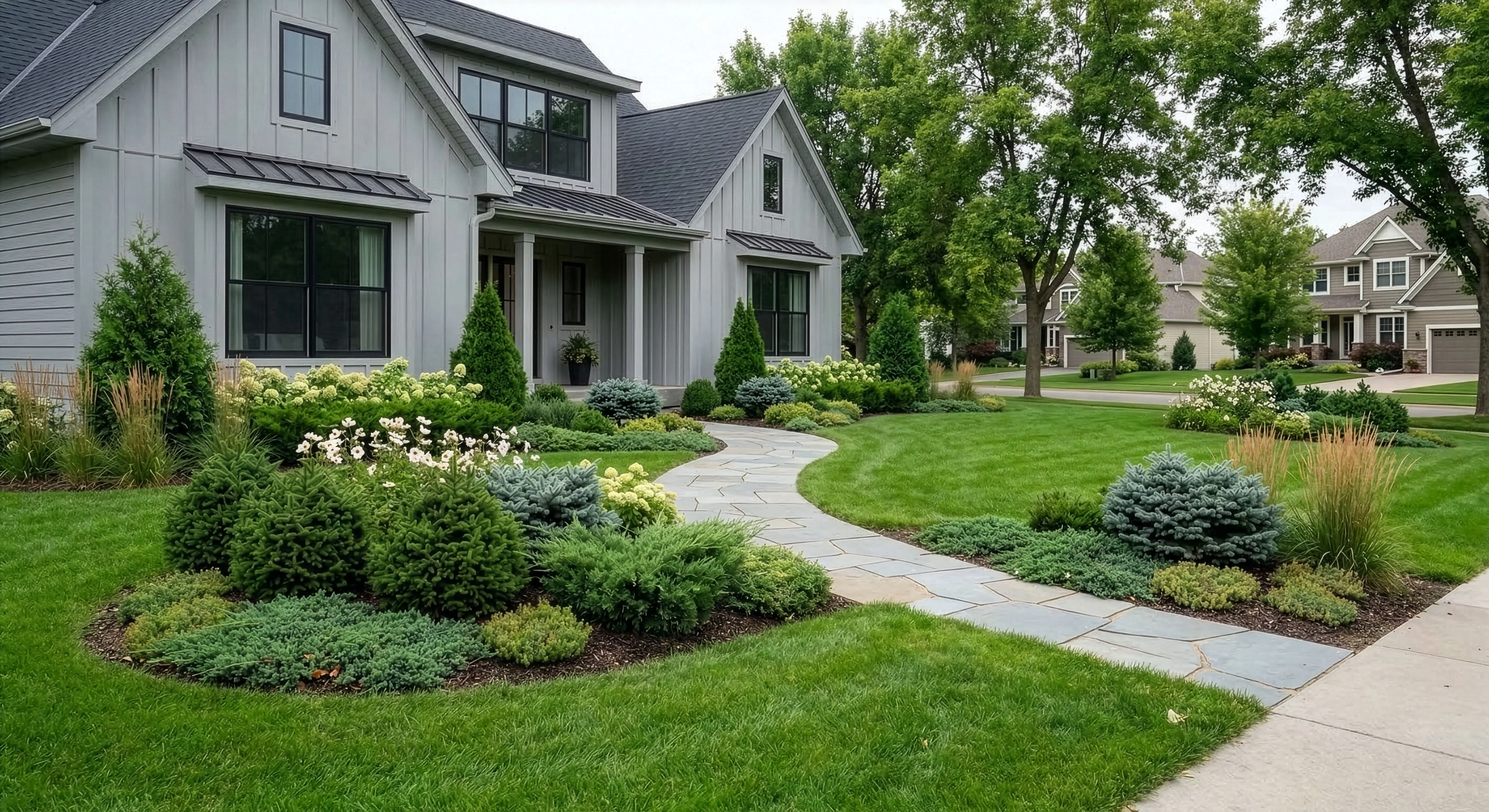
Each evergreen form has a clear job in this composition. Columnar arborvitae establish the vertical rhythm, globe spruce carries the middle mass, and Blue Pacific Juniper holds the front edge in a low continuous layer, so the planting reads as three distinct bands instead of one blended mass.
Ornamental grass adds a single seasonal element, with upright plumes visible above the juniper in late summer. Everything else stays constant year-round. The sweeping curved bed lines give this modern farmhouse a planting that feels naturalistic rather than installed.
Why This Design Works
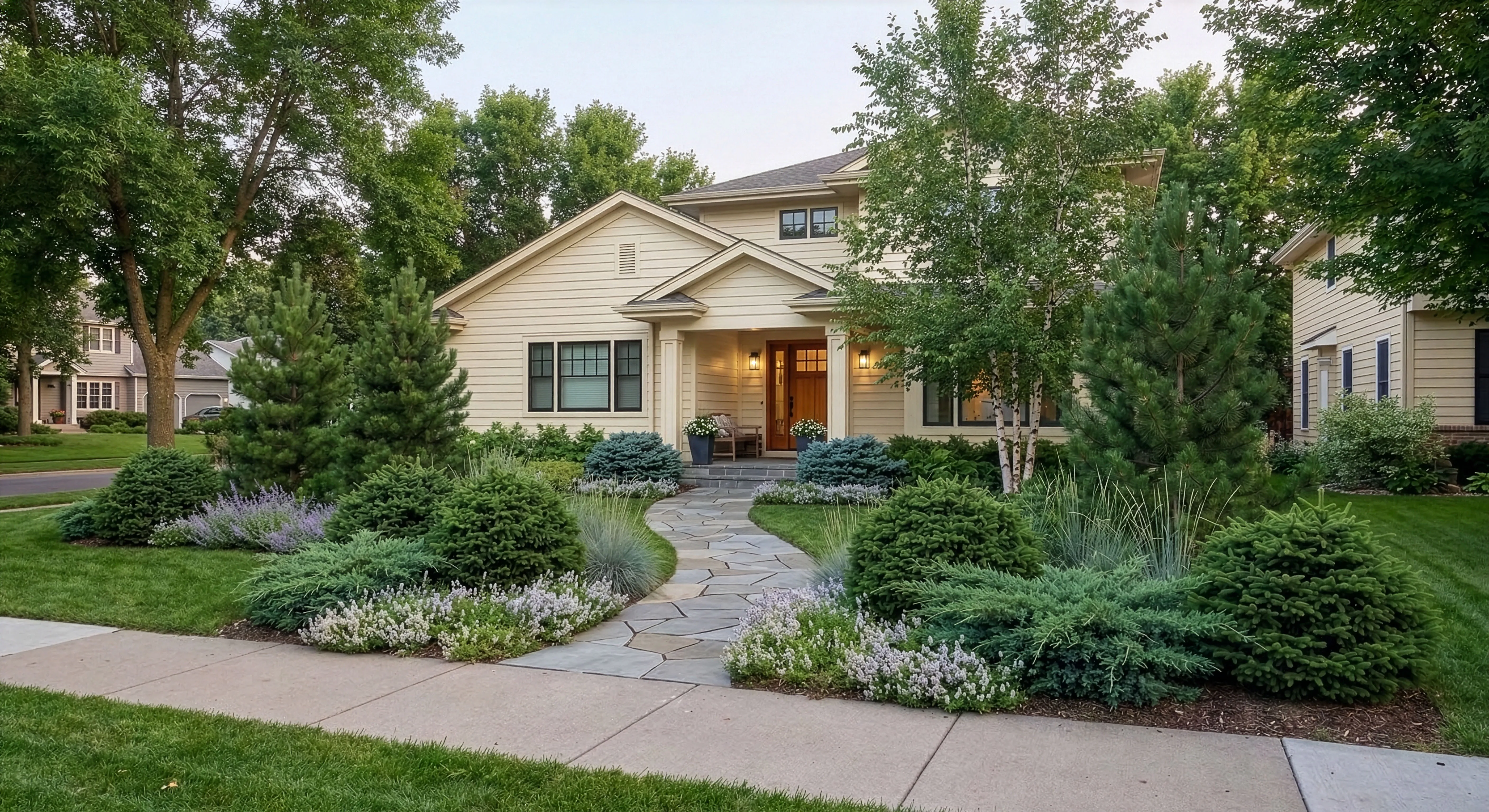
The evergreen base keeps this composition steady, while the birch gives it seasonal movement. Globe blue spruce and spreading juniper hold the curved path with consistent structure, white-blooming plants add a lighter edge in late summer, and the multi-stem birch introduces a shifting focal point without weakening the backbone of the yard.
The birch was placed specifically to give the composition a point of focus that evolves: white bark in winter, green canopy in summer, golden fall foliage before leaf drop. The evergreens provide the year-round backbone; the birch provides the seasonal variation. The two plant groups work together better than either would alone.
Why This Design Works
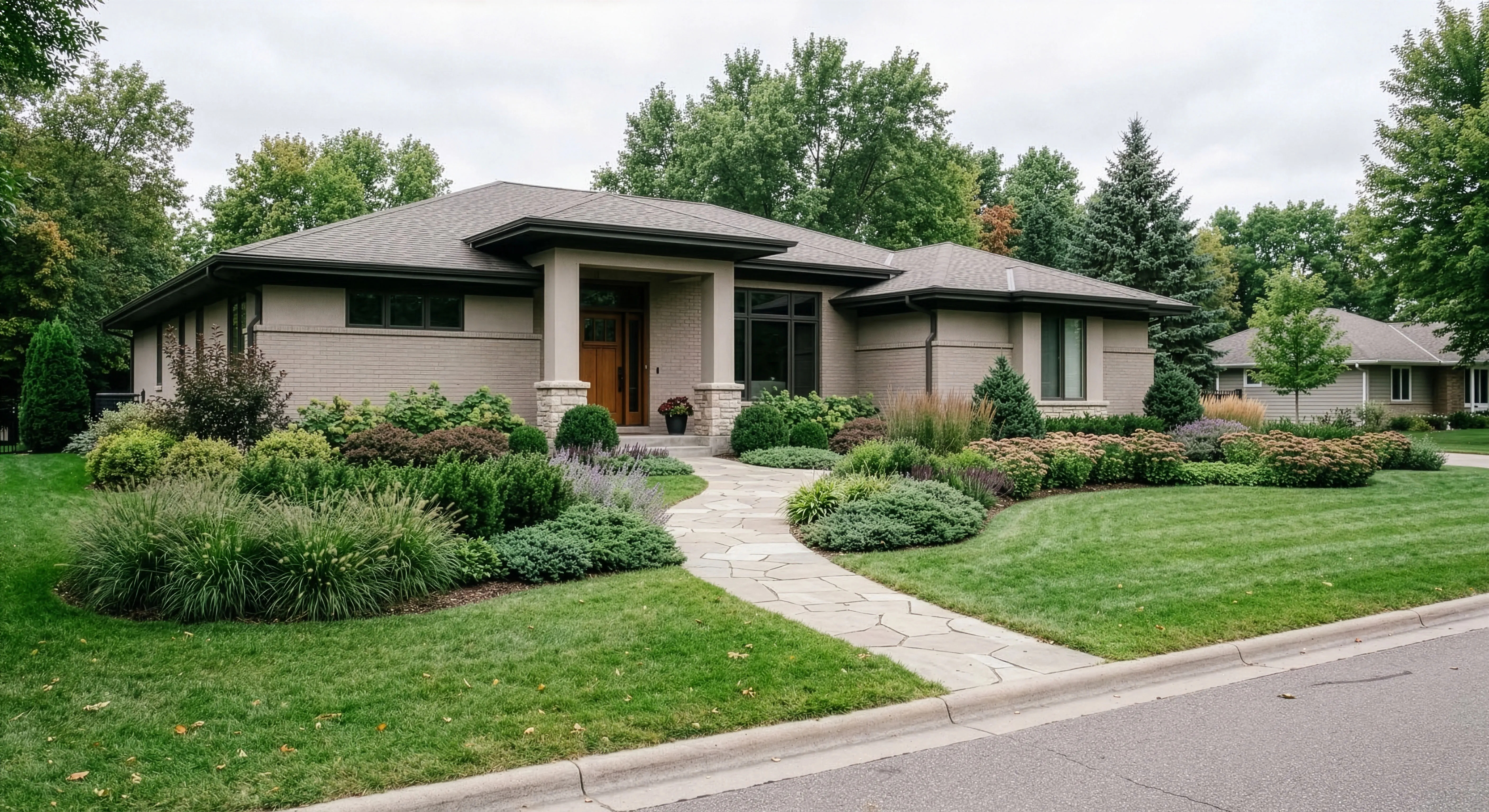
Fall color has more impact when it sits on a strong framework. Broad sweeps of Karl Foerster and other ornamental grasses bring amber, bronze, and warm gold across the front yard, while globe evergreen shrubs at the outer corners keep the composition grounded as the grasses change through September and October.
Most landscaping is at its best in July and has gone quiet by mid-September. This planting was designed in reverse, restrained in summer and most visually interesting in fall. The grasses that appear quietly textural in June transform into their most dramatic state as the season closes. By the time the first hard frost arrives, this yard has delivered its best week.
Why This Design Works
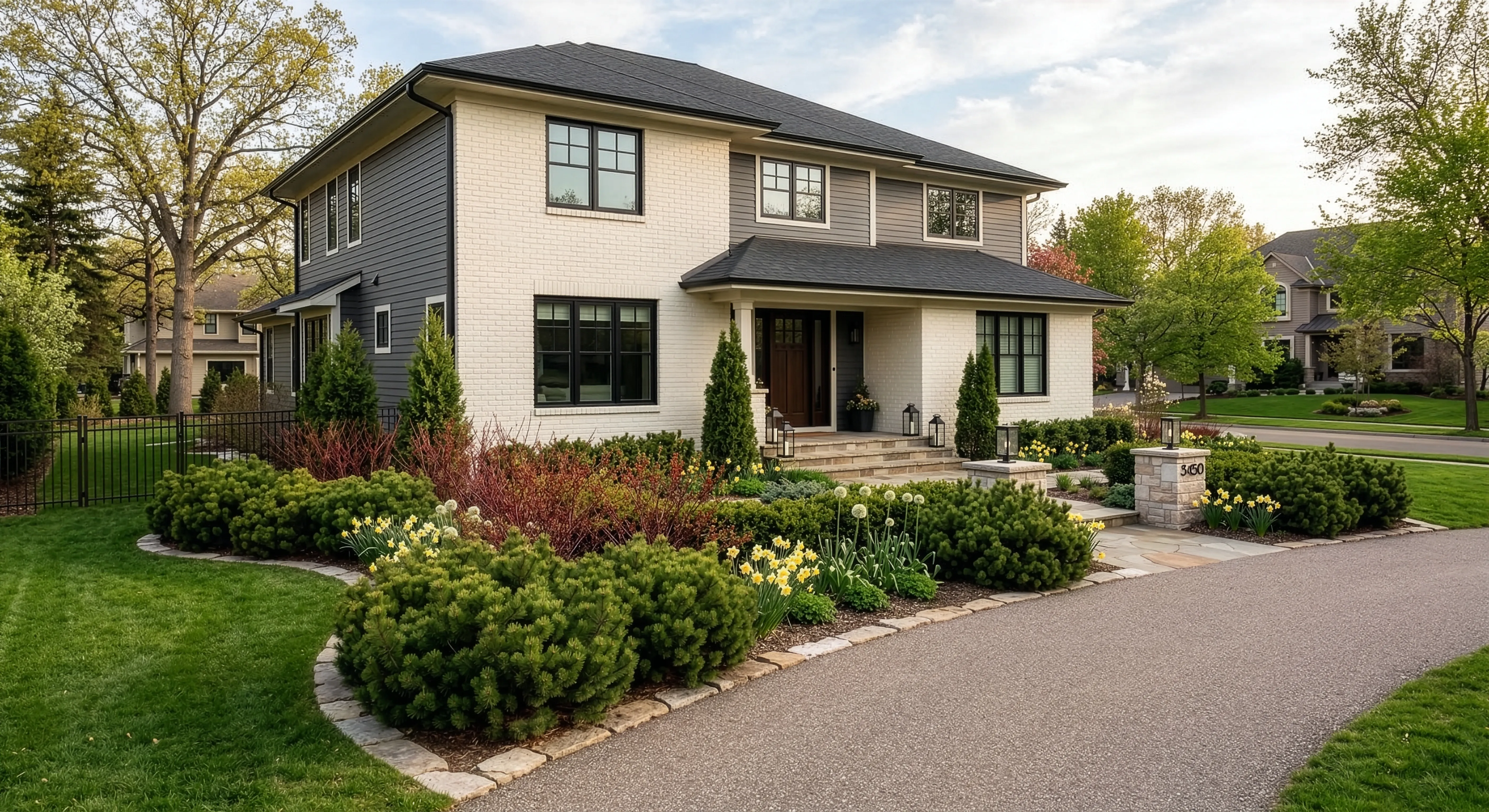
The hard edging and evergreen structure are what make this planting feel clean and intentional. Stone edging gives the front of the house a precise boundary, low mounded evergreens establish the permanent base, slim arborvitae strengthen the entry, and spring daffodils add a brief seasonal lift without changing the overall character of the design.
The stone edging is a design element, not just a maintenance feature. It creates an architecturally clear line that reinforces the contemporary character of the house and makes the beds read as intentional from the street. Once the daffodils finish in May, the composition settles back to a purely structural, four-season evergreen palette.
Get a free quote. We walk the property, show you exactly what we'd build, and have a fixed-price proposal in your hands within 24 hours.
Get a Free Quote