Restraint as a design choice. A focused plant palette, clean steel edging, and architectural specimens create a yard where every element earns its place, and nothing is there just to fill space.
Modern Minimalist installations start from a different premise than most landscaping: instead of asking what to add, we ask what to keep. The goal is a composition where every plant contributes visually and nothing is decorative for its own sake.
This typically means fewer species in larger masses, steel or concrete edging rather than natural stone, and a deliberate use of negative space. Open mulch areas are part of the composition, not a placeholder for plants to come. The result looks resolved from installation day, not like a work in progress.
This style works especially well with contemporary, mid-century modern, and new-construction homes where the architecture has clean lines and the front yard should reinforce rather than contradict that character.
Why This Design Works
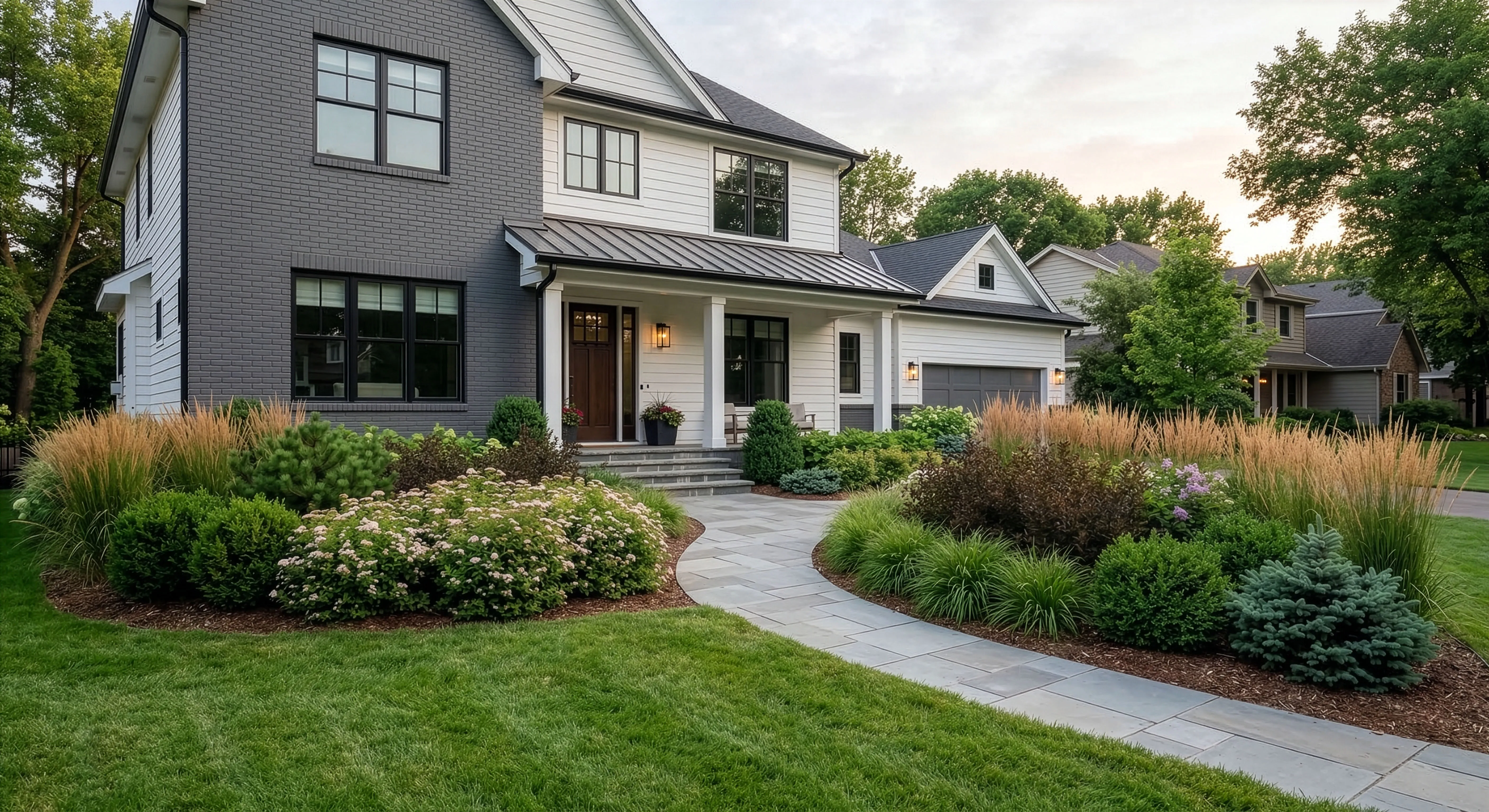
Movement and restraint stay in balance here. Bronze ornamental grasses carry motion across the beds, white hydrangea mounds act as fixed points against that movement, and low spreading evergreens tie the front edge back to the lawn so the composition feels controlled rather than loose.
The dark exterior is the backdrop that makes this planting work. The warm bronze of the grasses reads with particular clarity against dark surfaces; the white hydrangeas echo the white of the siding above them. The curved bed boundary, one continuous sweep rather than rectilinear boxes, reinforces the sense of the planting flowing toward the entry.
Why This Design Works
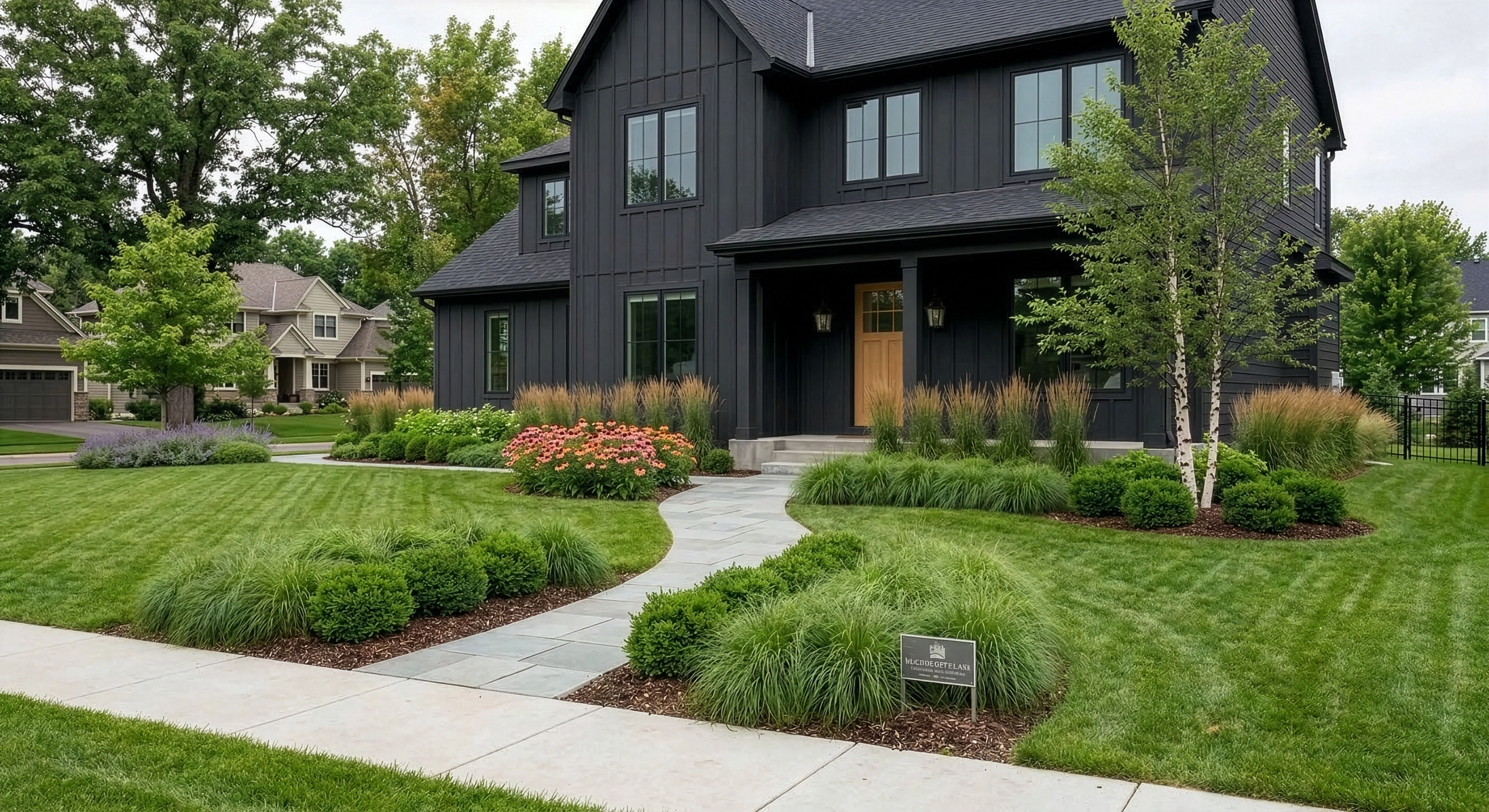
This planting commits fully to restraint. Broad sweeps of low mounding grass keep the beds quiet, small boxwood spheres introduce just enough geometry, and a multi-stem birch adds one vertical note and one seasonal point of interest without breaking the minimal character of the house.
This installation requires confidence to execute well. The temptation is always to add more plants. The restraint here is the design: the negative space between the boxwood spheres and the grass sweeps is as deliberate as the plants themselves. One small flowering accent near the entry is the sole concession to color, placed precisely enough that it reads as intentional rather than incidental.
Why This Design Works
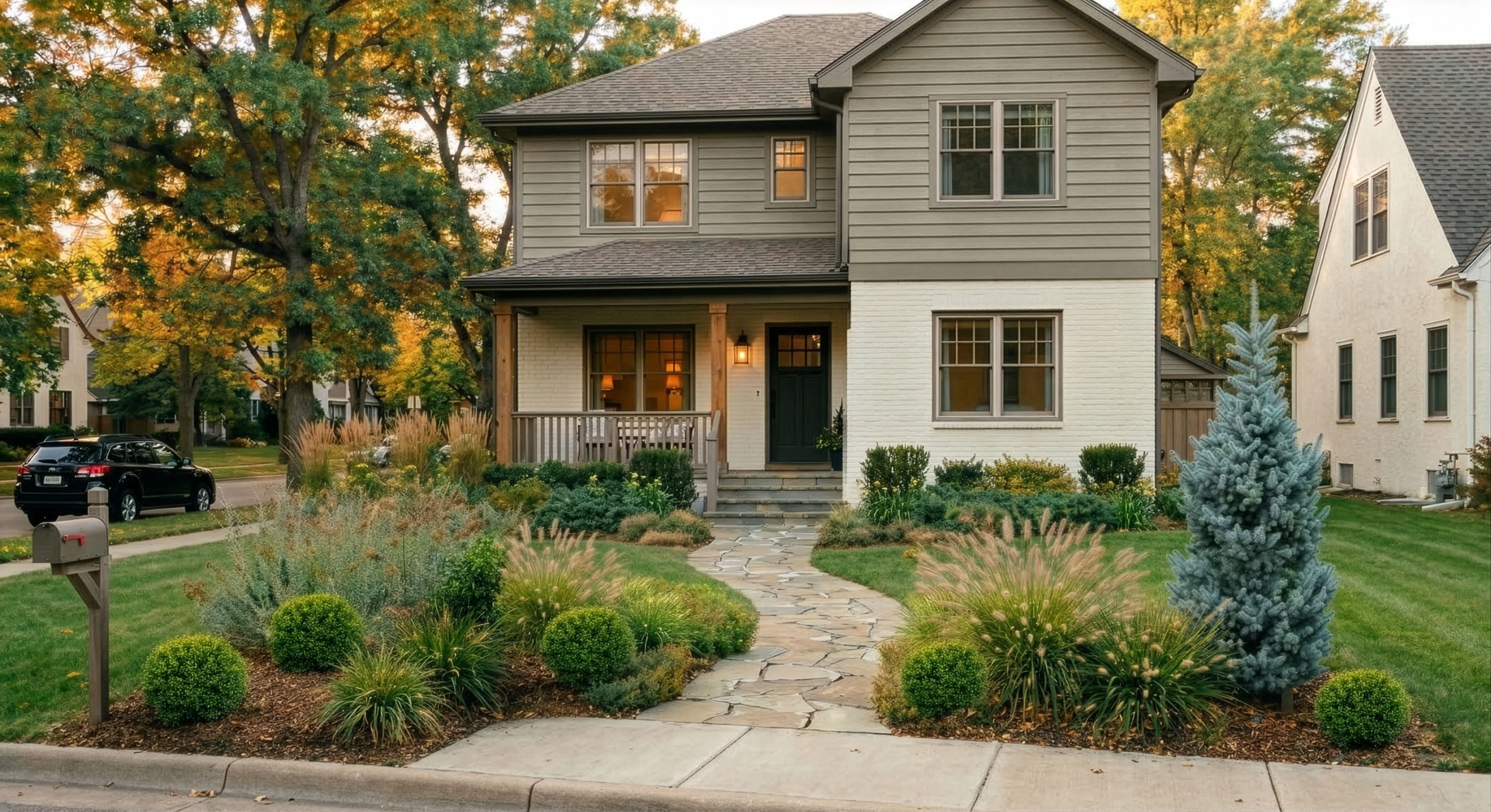
Seasonal drama lands better when permanent structure is doing its job underneath it. The autumn grasses bring the copper, amber, and gold, but globe shrubs hold the composition at ground level and the large blue spruce gives the whole yard a steady vertical counterpoint that keeps the fall color from feeling temporary or unmoored.
This planting was designed with fall as the intended peak. The grasses that read as quietly textural in summer transform into their most visually dramatic state in September and October. By the time most front yards are going quiet, this one is at its best. The globe shrubs and spruce are the skeleton; the grasses are the event.
Why This Design Works
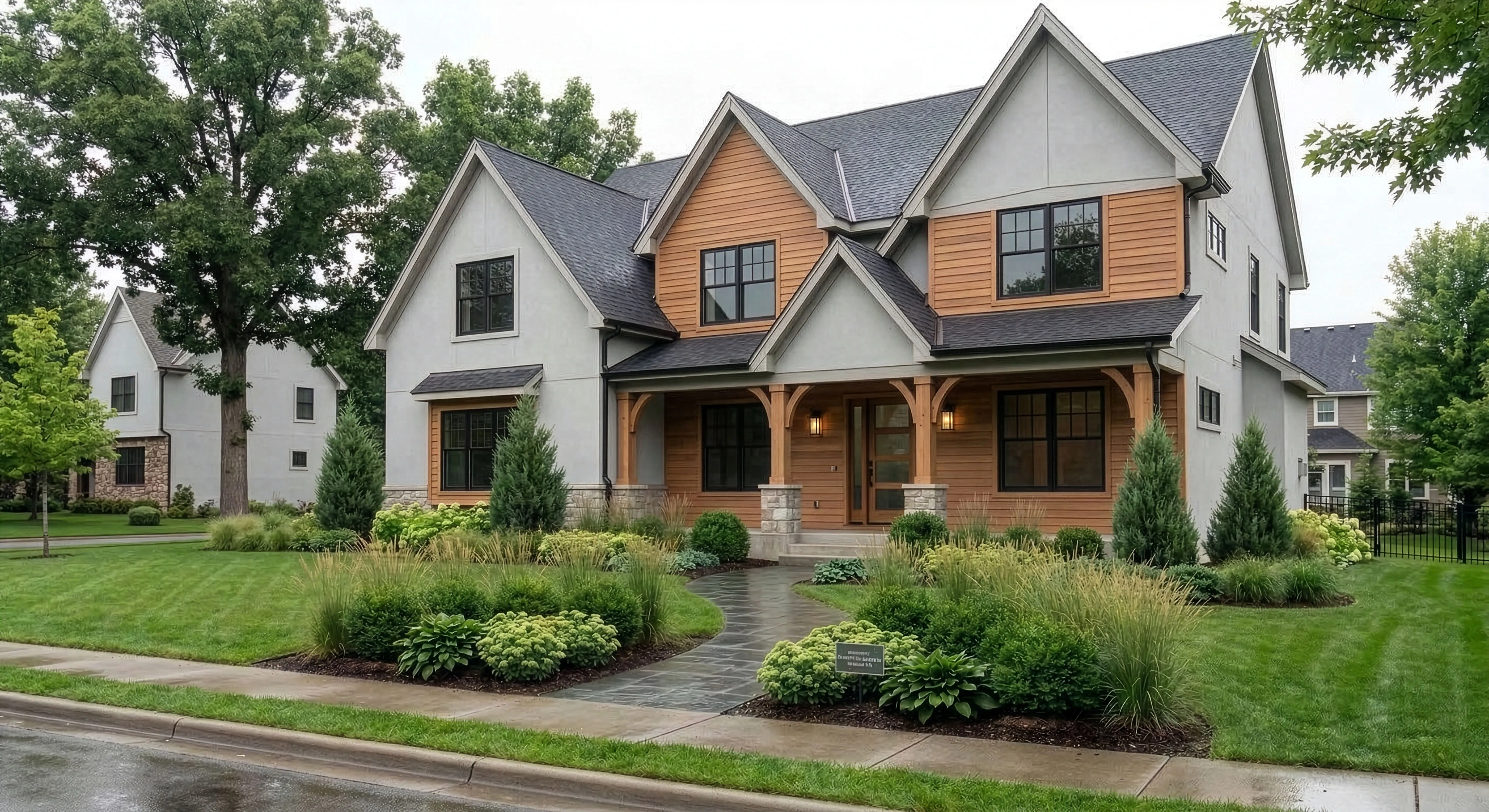
The texture stays disciplined from front to back, which is what makes this design feel so unified. Tall Karl Foerster, cascading golden Hakonechloa, broad-leaf hosta, and the conical arborvitae at the entry all support the same grass-forward vocabulary, so the yard feels deliberate even without any flowering layer.
The decision to eliminate flowering plants entirely is what gives this planting its unity. Every element is grass-textured or grass-adjacent; the design vocabulary stays consistent from front to back. The result reads as resolved and complete rather than still developing, which is the intended effect from installation day forward.
Why This Design Works
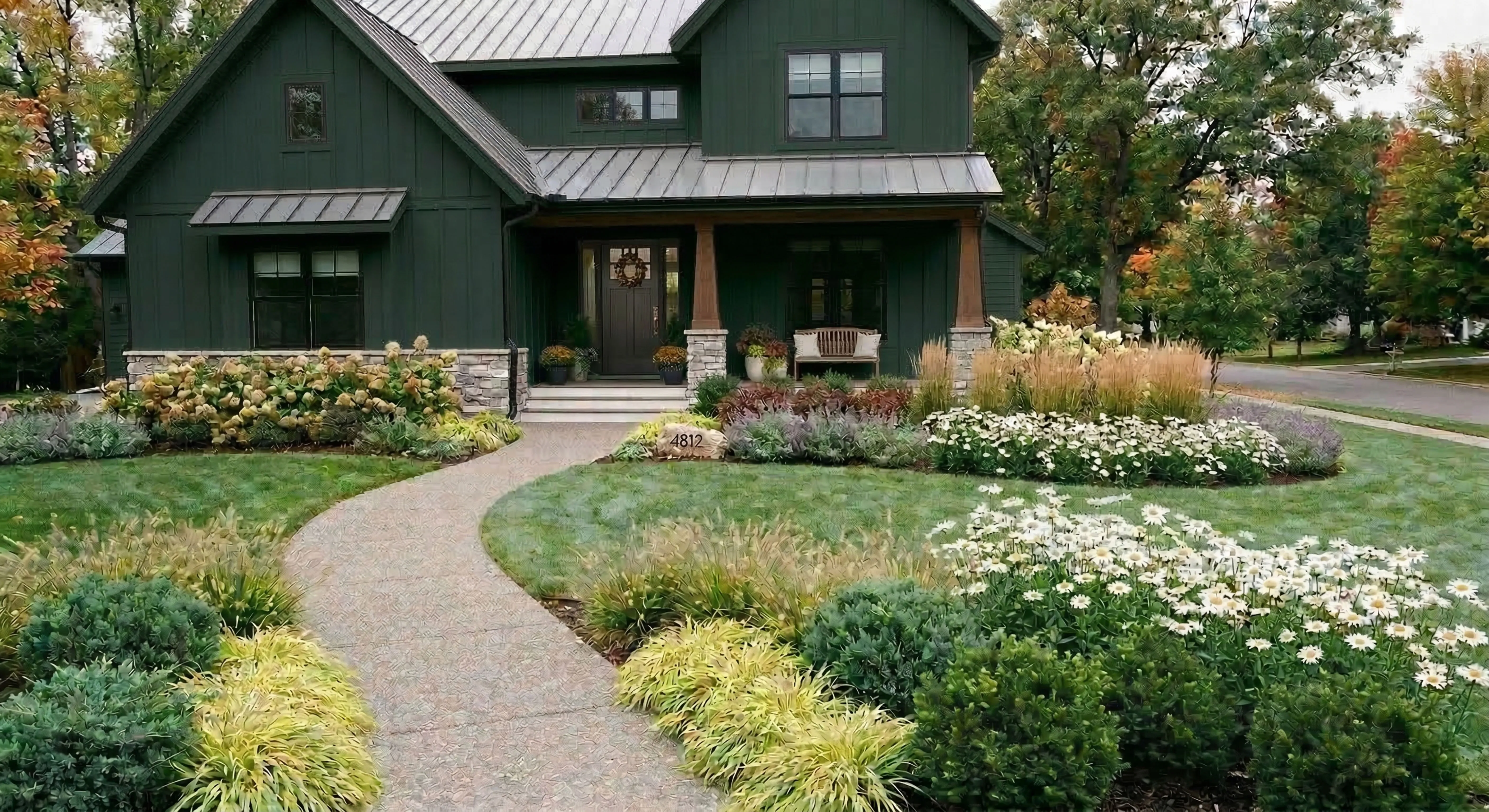
The palette is tied closely to the house color and the rural character of the site. Golden Japanese forest grass, white Shasta daisies, bronze ornamental grasses, and hydrangeas in fall color all feel warmer and more integrated against the dark green exterior, and the informal edge at the gravel path keeps the composition from feeling over-finished.
The dark green exterior and warm gold-white palette create an unusual visual cohesion. The garden feels like an extension of the architecture rather than something placed in front of it. The informal bed edges and gravel path reinforce the rural character of the barn-style home.
Why This Design Works
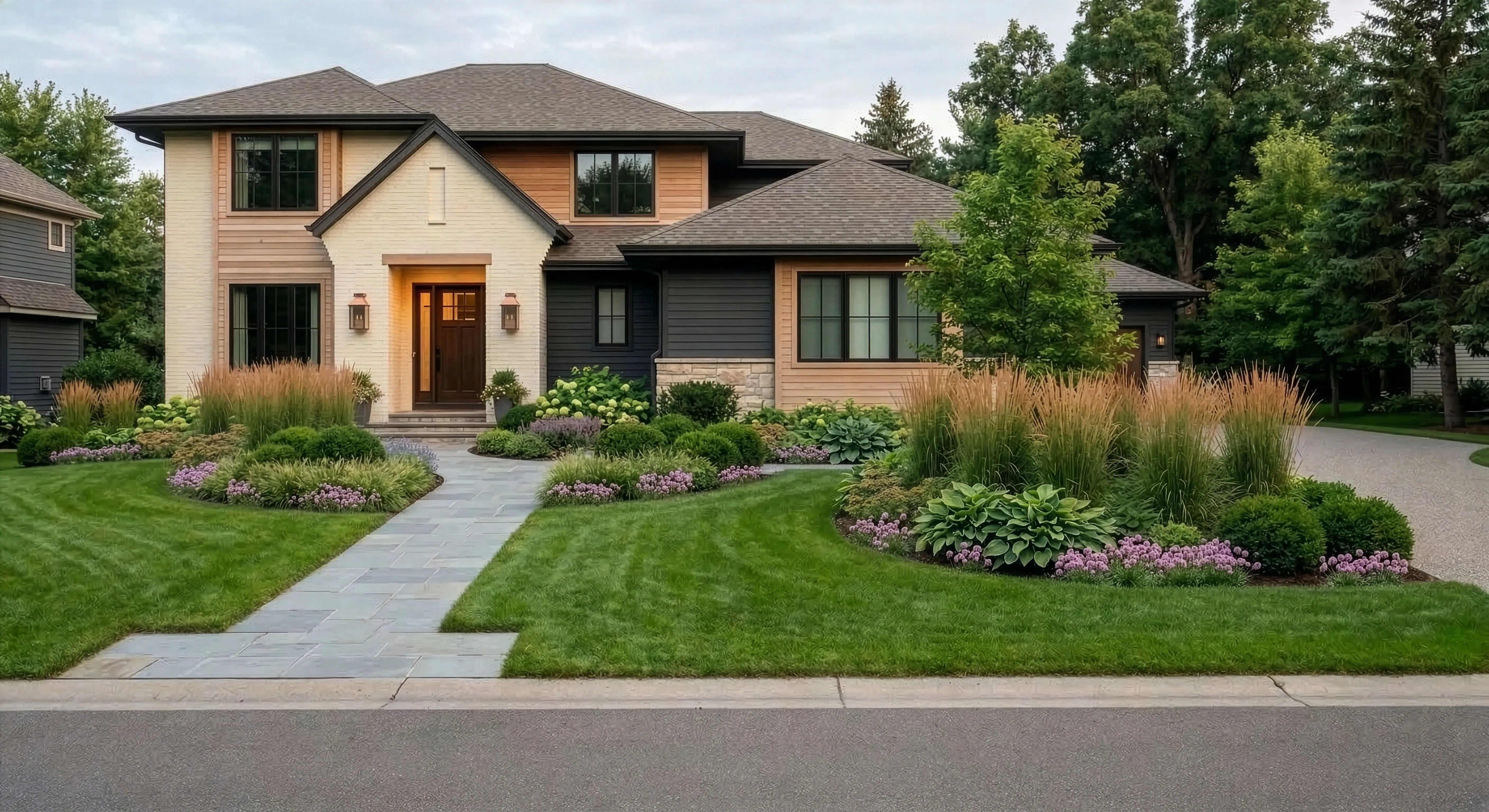
Scale is doing most of the work here. Broad drifts of Karl Foerster push well into the lawn, hostas and low perennials hold the front edge, and the pink alliums and lavender add a seasonal layer, but the real difference is the width and height of the beds themselves, which gives the yard a presence a shallow foundation planting never could.
Most residential front yards keep plantings tight to the foundation. Extending the beds this far into the lawn and letting the grasses be the dominant feature changes the character of the entire property. The house reads as part of a larger landscape rather than sitting on a flat lawn. At this scale, fewer species in larger masses is not a constraint; it's what makes the planting legible from the street.
Get a free quote. We walk the property, show you exactly what we'd build, and have a fixed-price proposal in your hands within 24 hours.
Get a Free Quote